

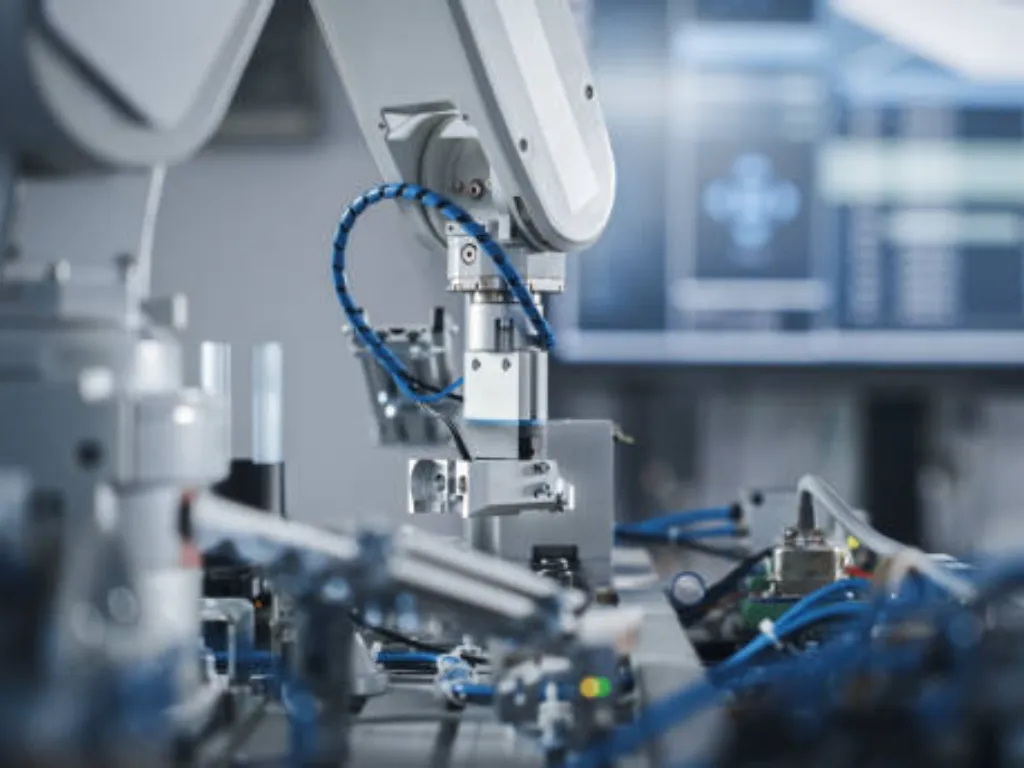
Industrial Automation Services are reshaping global manufacturing by enabling faster production cycles, higher precision, and smarter decision-making systems. In 2026, manufacturers increasingly depend on Industrial Automation Services to stay competitive in fast-moving markets where efficiency, data accuracy, and operational agility determine long-term success. From robotics integration to intelligent monitoring systems, automation is now a core driver of industrial transformation.
JLM Express delivers advanced Industrial Automation Services designed to optimize production environments, improve system reliability, and support scalable industrial growth. These solutions help manufacturers transition into digitally connected operations aligned with Industry 4.0 standards.
What Industrial Automation Services Mean in Modern Industry
Industrial Automation Services refer to the design, deployment, and optimization of technology-driven systems that control industrial processes with minimal human intervention. These services combine engineering expertise with digital technologies to improve production accuracy, reduce operational costs, and enhance system safety.
Core elements include:
- Programmable Logic Controllers (PLC) for machine control
- SCADA systems for centralized monitoring and data visualization
- Robotics systems for repetitive and precision tasks
- Industrial sensors for real-time performance tracking
- Integrated control platforms for seamless production flow
Industrial Automation Services are essential in industries such as manufacturing, automotive, food processing, electronics, and logistics where consistency and speed are critical.
Importance of Industrial Automation Services for Competitive Advantage
Industrial Automation Services are no longer optional enhancements; they are strategic necessities for modern production systems. Companies adopting automation gain measurable advantages in efficiency, quality control, and scalability.
Higher Operational Efficiency
Automation reduces reliance on manual processes, allowing machines to operate continuously with minimal interruptions. This leads to faster production output and improved workflow consistency.
Improved Product Quality and Consistency
Automated systems maintain precise control over manufacturing parameters. This reduces defects, ensures uniform product quality, and enhances customer satisfaction.
Reduced Operational Costs
By optimizing energy usage, reducing waste, and minimizing labor-intensive tasks, Industrial Automation Services help lower long-term production costs.
Data-Driven Decision Making
Real-time data collection allows managers to analyze production performance and identify inefficiencies quickly. This supports faster and more informed decision-making.
Key Technologies Behind Industrial Automation Services
Modern Industrial Automation Services rely on advanced technologies that work together to create intelligent production environments.
Robotics and Automated Systems
Industrial robots handle complex and repetitive tasks such as welding, assembly, packaging, and material handling. These systems improve speed and reduce human error.
PLC and SCADA Integration
PLC systems manage machine-level functions, while SCADA systems provide centralized monitoring and control. Together, they create synchronized production environments.
Industrial Internet of Things (IIoT)
IIoT connects machines, sensors, and control systems to collect and transmit real-time data. This improves transparency and supports predictive analytics.
Artificial Intelligence and Machine Learning
AI systems analyze large datasets from production lines to detect inefficiencies, forecast maintenance needs, and optimize workflows.
Cloud-Based Automation Systems
Cloud integration allows remote monitoring and management of industrial operations, improving accessibility and scalability.
Industrial Automation Services and Digital Transformation
Digital transformation in manufacturing is heavily dependent on Industrial Automation Services. These services enable factories to shift from traditional operations to smart, connected ecosystems.
Key transformation benefits include:
- Seamless integration between machines and software systems
- Real-time production monitoring and analytics
- Improved supply chain coordination
- Faster response to market demand changes
- Enhanced energy efficiency and sustainability
JLM Express supports this transformation by providing scalable automation systems tailored to modern industrial demands.
Practical Applications of Industrial Automation Services
Industrial Automation Services are applied across multiple sectors, each benefiting differently based on operational requirements.
Manufacturing Industry
Automation improves assembly line speed, reduces downtime, and ensures consistent product quality.
Automotive Sector
Robotics and automated inspection systems enhance precision in vehicle assembly and safety testing.
Food and Beverage Production
Automation ensures hygiene compliance, consistent packaging, and accurate portion control.
Electronics Industry
High-precision automation supports micro-level assembly and reduces defect rates in sensitive components.
Logistics and Warehousing
Automated systems streamline inventory tracking, sorting, and distribution processes.
Implementation Process of Industrial Automation Services
A structured implementation approach ensures successful deployment of automation systems.
Step 1: System Assessment
Existing production systems are evaluated to identify inefficiencies and automation opportunities.
Step 2: Solution Design
Customized automation frameworks are designed based on operational requirements and production goals.
Step 3: System Integration
Hardware and software components such as PLCs, sensors, and robotics are integrated into the production environment.
Step 4: Testing and Optimization
Systems are tested under real operating conditions to ensure performance accuracy and reliability.
Step 5: Continuous Monitoring and Support
Ongoing monitoring ensures systems remain efficient and adaptable to changing production demands.
Benefits of Industrial Automation Services for Long-Term Growth
Industrial Automation Services provide long-term strategic value beyond immediate operational improvements.
Increased Scalability
Automated systems allow businesses to expand production capacity without significantly increasing labor costs.
Enhanced Safety Standards
Automation reduces human exposure to hazardous environments and improves workplace safety compliance.
Energy Efficiency
Smart systems optimize energy consumption by regulating machine usage and reducing waste.
Predictive Maintenance Capabilities
Early fault detection prevents equipment failures and reduces costly downtime.
Stronger Market Competitiveness
Companies leveraging automation can respond faster to demand changes and deliver higher-quality products.
Challenges in Industrial Automation Adoption
While Industrial Automation Services offer significant benefits, implementation may present challenges.
Common challenges include:
- High initial investment costs
- Need for skilled technical personnel
- Integration complexity with legacy systems
- Cybersecurity risks in connected environments
- Continuous maintenance and system upgrades
Addressing these challenges requires strategic planning and expert guidance from experienced automation providers.
Return on Investment (ROI) in Industrial Automation Services
ROI is a key factor when evaluating Industrial Automation Services. Although initial costs may be high, long-term benefits significantly outweigh investments.
Measurable ROI factors include:
- Reduced labor and operational expenses
- Lower maintenance and repair costs
- Increased production output
- Reduced material waste
- Improved product quality leading to higher customer retention
Over time, automation systems generate sustainable financial and operational returns.
Future Trends in Industrial Automation Services (2026 and Beyond)
The future of Industrial Automation Services continues to evolve rapidly with technological innovation.
Emerging trends include:
- Fully autonomous manufacturing facilities
- Expansion of AI-powered predictive systems
- Integration of digital twins for simulation and testing
- Edge computing for faster data processing
- Sustainable automation focused on carbon reduction
These trends indicate a shift toward highly intelligent and self-regulating industrial ecosystems.
Why Choose JLM Express for Industrial Automation Services
JLM Express provides comprehensive Industrial Automation Services designed to meet modern manufacturing demands. The focus remains on efficiency, reliability, and scalability across all automation solutions.
Key strengths include:
- Expertise in industrial control systems and robotics
- Tailored automation solutions for different industries
- Focus on long-term operational performance
- Integration of modern digital technologies
- Commitment to process optimization and efficiency
More information is available at: https://jlmprocess.com/
Conclusion
Industrial Automation Services have become a key pillar of modern manufacturing success in 2026. Through the integration of robotics, PLC systems, SCADA platforms, IoT solutions, and AI-powered analytics, production systems are now more efficient, scalable, and safer than ever before.
Businesses that implement Industrial Automation Services achieve greater operational control, higher product consistency, and improved long-term cost performance. As global industries continue shifting toward fully connected and intelligent digital ecosystems, automation stands at the center of sustainable growth and long-term competitiveness. JLM Express supports this transformation by delivering tailored automation solutions designed to enhance productivity and system reliability.