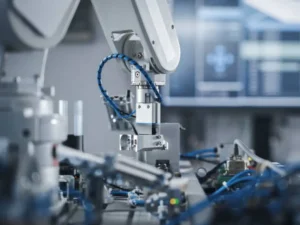


The modern warehouse is no longer just a place for storage; it has transformed into a dynamic hub of activity powered by sophisticated technology. This evolution is reshaping the logistics landscape, enabling faster, more accurate, and highly efficient operations. For businesses looking to gain a competitive edge, embracing these advancements is no longer optional. Professional providers now offer advanced warehousing & distribution solutions that leverage technology to streamline every aspect of the supply chain, from inventory management to final delivery.
Enhancing Accuracy with Warehouse Management Systems
At the core of a technologically advanced warehouse is a powerful Warehouse Management System (WMS). This software platform serves as the central brain of the operation, providing real-time visibility and control over the entire inventory. A WMS automates processes that were once manual and prone to error, such as receiving, put-away, picking, and shipping. By tracking every item from the moment it enters the facility until it leaves, these systems drastically improve inventory accuracy.
With barcode scanners and RFID technology, workers can instantly update the WMS, ensuring that data is always current. This level of precision minimizes stockouts, reduces carrying costs, and prevents costly picking errors. The data collected also provides valuable insights for forecasting and planning, allowing businesses to make more informed decisions. A clear warehouse and distribution understanding reveals that while a warehouse stores goods, distribution is about movement, and a WMS optimizes both functions seamlessly.
Boosting Efficiency Through Automation
Automation is another key technological driver transforming warehouse operations. Automated Guided Vehicles (AGVs) and Autonomous Mobile Robots (AMRs) are increasingly used to transport goods within the facility, reducing the reliance on manual labor for repetitive tasks. These robots can navigate the warehouse floor independently, moving pallets and products to their designated locations with remarkable efficiency.
In the order fulfillment process, automation plays a critical role. Automated storage and retrieval systems (AS/RS) can store and retrieve items at high speeds, bringing goods directly to a stationary worker. This “goods-to-person” model eliminates the time employees spend walking through aisles, dramatically increasing picking rates and reducing physical strain. This technology not only speeds up fulfillment but also allows for denser storage, maximizing the use of available space.
Improving Safety and Productivity
Technology also contributes significantly to creating a safer work environment. The use of robots and automated systems for heavy lifting and transportation reduces the risk of injuries associated with manual handling. Furthermore, wearables and sensor technology can monitor worker fatigue and alert supervisors to potential safety hazards in real-time.
Rather than replacing human workers, technology often empowers them to be more productive. Tools like voice-directed picking systems provide operators with hands-free instructions, allowing them to focus on the task without consulting paper lists or handheld devices. Augmented reality (AR) glasses can overlay digital information onto a worker’s field of view, guiding them to the correct location and verifying picks. These innovations make tasks simpler, faster, and more accurate.
Conclusion
The integration of technology is fundamentally changing the nature of warehousing. From sophisticated management software to intelligent automation, these advancements are driving unprecedented levels of efficiency, accuracy, and safety. By partnering with a logistics provider that leverages these modern tools, businesses can ensure their supply chain is not only prepared for today’s demands but is also scalable for future growth. This strategic adoption turns a traditional storage space into a powerful competitive asset.